

// Security Patch & Update Management
Close the window between a patch existing and a patch landing
Security Patch & Update Management is the process of detecting missing updates, deciding which ones matter most, deploying them safely, and proving they landed. The goal is to close known vulnerabilities before they are exploited, without taking business-critical systems down to do it.
Disclosure has outpaced the teams that have to respond to it
A patch that exists is not a patch that protects you. The exposure window opens when a vulnerability is disclosed and closes only when the fix has reached every affected system. For most organizations that gap is measured in weeks.
The workload is why. 48,185 CVEs were published in 2025, roughly 132 per day. No triage process staffed by people reads 132 advisories a day, maps them to an estate of Windows, macOS, Linux, servers, virtual desktops, and contractor machines, and decides what moves first. Meanwhile the team covering that estate has not grown, and the regulatory expectations on it, NIS2 and ISO 27001 among them, have.
Raynet One closes the gap by connecting three things that usually sit apart: a complete, normalized picture of what is installed, the vulnerability and lifecycle context that says which gaps actually matter, and a deployment path with tested packages ready to go. Patches are prioritized by severity and exposure, rolled out in controlled waves, and verified afterwards.
The result is a patch process that keeps pace with disclosure rather than falling behind it, documented in a way an auditor accepts.
Patch faster without widening the blast radius
Close security gaps
Detect missing updates, prioritize vulnerabilities by risk, and deploy critical patches first.
Cut manual patch effort
Automate patch detection, packaging, scheduling, and deployment to reduce manual work.
Protect availability during rollout
Use deployment rings, maintenance windows, and approvals to minimize disruption.
Stay audit-ready
Track patch status, exceptions, and remediation history to support ISO 27001, BSI, NIS2, and GDPR compliance.
Security Patch & Update Management
Effective patching needs more than a list of missing updates. Teams need to know which software is genuinely installed, which versions are still supported, which vulnerabilities apply to their estate, who depends on the affected systems, and whether a tested package is ready to deploy.
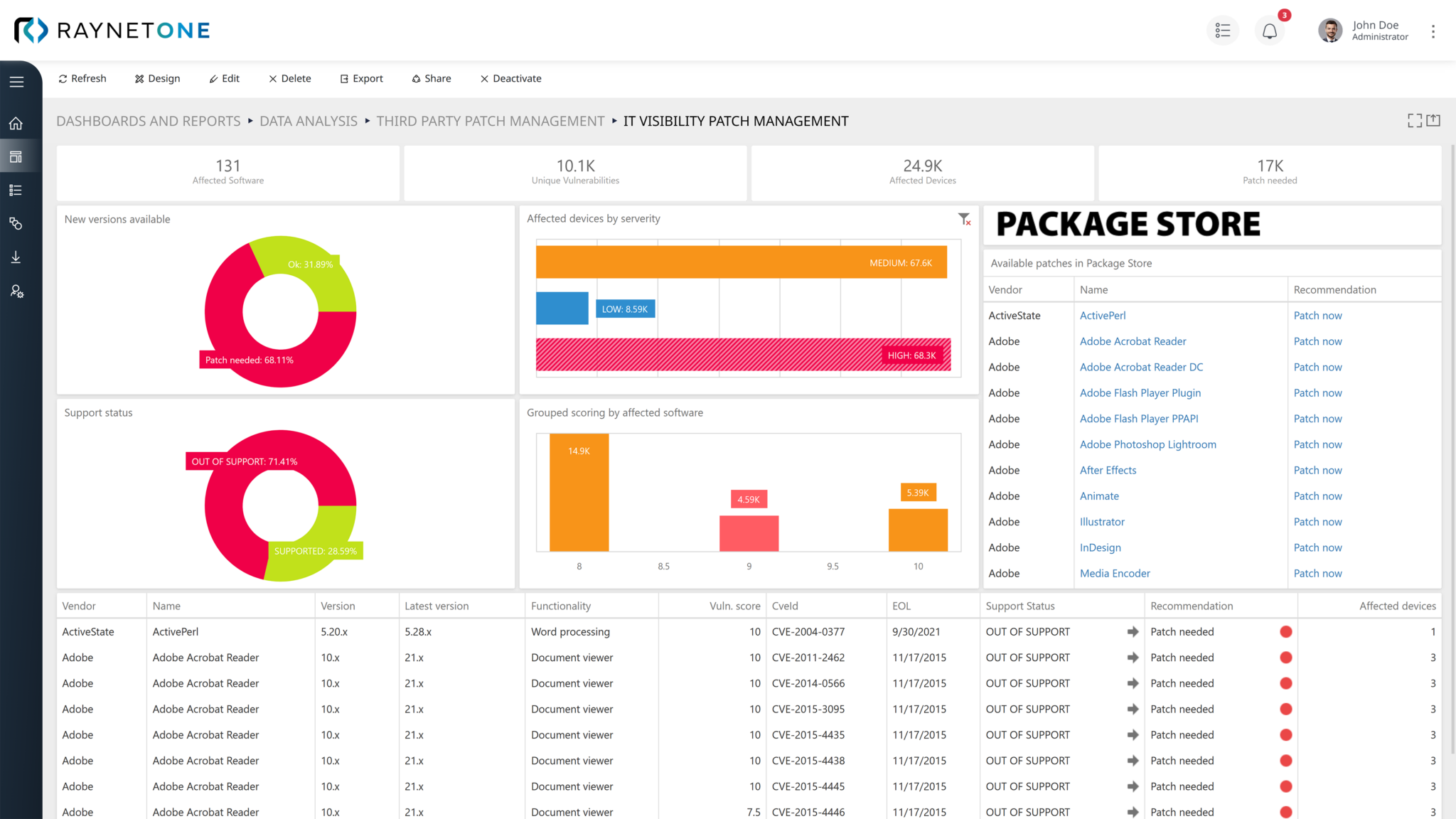
Raynet One assembles that picture from your own environment. Agent-based and agentless inventory, together with more than 200 connectors, collect endpoint, software, and configuration data. The Raynet One Technology Catalog normalizes it into consistent vendor, product, and version identity, then enriches it with lifecycle status, support dates, and known vulnerabilities, so the platform acts on what is actually installed rather than on a best guess.
From there, patching runs as a controlled workflow. Rules prioritize deployment by vulnerability severity and exposure. The integrated Raynet Package Store supplies more than 50,000 tested packages for Windows and macOS, so third-party and standard software can be updated without building each package by hand. Rollouts move through rings and maintenance windows, and every action is verified and documented.
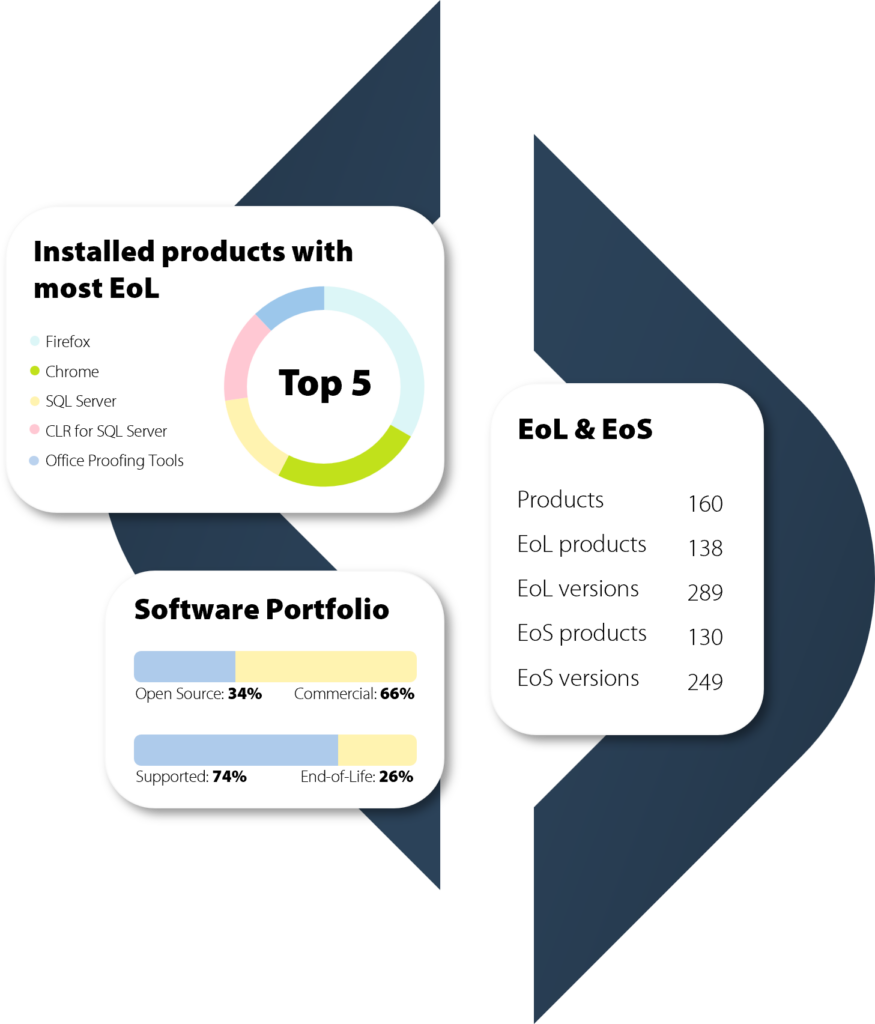
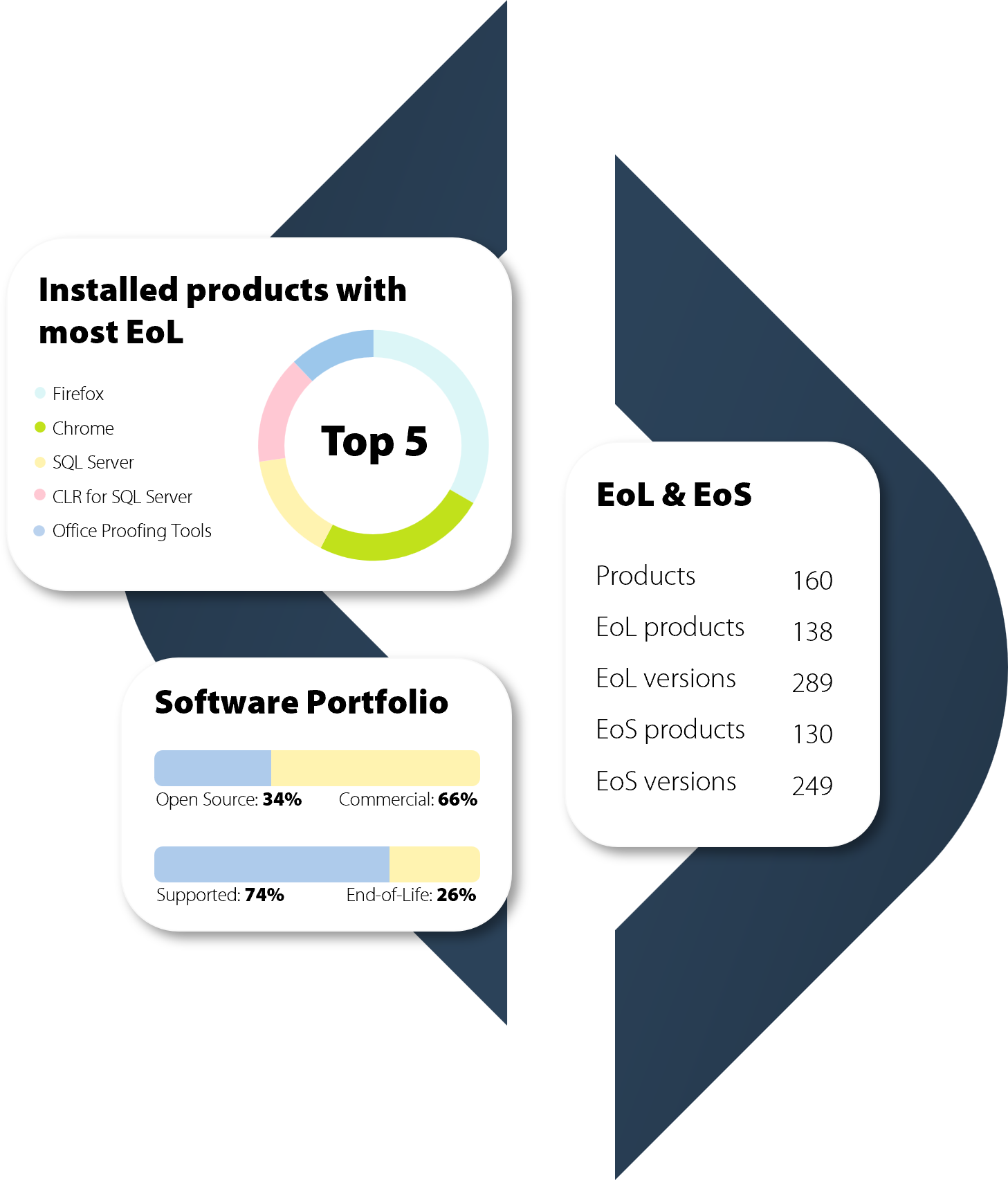
Unsupported software surfaces in the same view, because a product past End-of-Support will never receive the patch you are waiting for. Those cases route to replacement or mitigation instead of sitting in a patch queue indefinitely.
The global SAM team makes IT visibility a top governance priority

With powerful Raynet technologies, a leading global sporting goods manufacturer set itself the goal of optimising its Software Asset Management (SAM) and ensuring complete transparency across its entire IT infrastructure.
The introduction of Raynet One and the establishment of a company-wide ‘big picture’ made IT visibility a governance priority at board level during the course of the project. The result: complete transparency, greater control and sustainable efficiency for IT teams and the business.
This success story shows how Raynet One not only gives companies technical transparency, but also enables them to make more informed strategic decisions and minimise risks.
Customers who rely on Raynet technologies




Patch what is actually there, in the order that actually matters
Most patch tools are an execution engine bolted onto a scanner. They report a missing update and push it, with no view of whether the software is genuinely installed, still supported, or worth moving ahead of the next item on the list. Raynet One makes the patch decision on its own asset intelligence:
- Verified install base: normalized vendor, product, and version identity from the Raynet One Technology Catalog, so deployment targets what is really running rather than what a scanner inferred.
- Priority by exposure, not by score: exploitability, support status, install count, and business criticality decide what moves first, instead of working down a CVSS list.
- Unpatchable software routed out: a product past End-of-Support will never receive the fix you are waiting for, so those cases go to replacement or mitigation instead of sitting in the queue indefinitely.
- Evidence as a by-product: patch status, exceptions, and remediation history are recorded as the work happens, so audit preparation draws on data that already exists.
A patch tool tells you what is missing. Raynet One tells you what to do about it, and why in that order.
Discover more about Security Patch & Update Management
Frequently asked questions about Security Patch & Update Management
What is Security Patch & Update Management?
How is it different from Third-Party Patch Management?
Security Patch & Update Management covers the whole patch process across the estate, including operating systems, native platform updates, and applications. Third-Party Patch Management is the part of that work dealing specifically with non-native applications, which is where tools such as Microsoft Intune and Jamf usually leave a gap. In Raynet One both run on the same data foundation.
What is Autonomous Endpoint Management and how does it relate to patching?
Autonomous Endpoint Management describes endpoint management where the platform monitors continuously, decides what action is needed based on risk and policy, carries it out, and verifies the outcome, with people setting the guardrails rather than triggering each step. Patching is usually the first place organizations apply it, because the volume is high and the work is repeatable.
What makes Security Patch & Update Management with Raynet One different?
Raynet One patches on top of its own asset intelligence rather than beside it. Endpoint data is normalized and enriched through the Raynet One Technology Catalog before any patch decision is made, so prioritization reflects what is genuinely installed, which versions are still supported, and which vulnerabilities actually apply. The Raynet Package Store then supplies tested packages for deployment, and rings and approval gates keep the rollout controlled.
Can patching run automatically without losing control?
How does Security Patch & Update Management support compliance?
Continuous patching with documented evidence supports requirements under standards such as ISO 27001, BSI, NIS2, and GDPR. Patch status, exceptions, and remediation history are recorded as the work happens, so audit preparation draws on data that already exists.
Contact our experts
Interested in our solutions, need further Information, or have questions?
With more than 25 years of experience and numerous customer projects worldwide, we can help you with your challenges – contact us today!