
// Vulnerability Management
Know which vulnerabilities are actually yours
Vulnerability Management is the continuous process of identifying vulnerabilities in the software and systems you run, assessing what they mean for your environment, prioritizing them by real risk, and tracking them through to remediation. The goal is to act on the findings that matter rather than working through a list sorted by severity alone.
Severity is not risk, and a finding is not a fact
Most vulnerability programs fail in one of two directions. Either the list is too long to act on, because everything rated “High” arrives with equal weight, or findings are inaccurate because they were matched to software the organization does not actually run.
Both problems come from the same place. A vulnerability feed describes products in the abstract: a vendor, a product, a version range. Turning that into a statement about your environment requires knowing what is installed, on which systems, and owned by whom. When that picture is incomplete, the findings inherit the problem.
Raynet One approaches Vulnerability Management from the asset side. Discovered software and hardware are normalized into consistent product identity, matched against vulnerability data, and enriched with lifecycle, ownership, and business context. Risk-based Vulnerability Management then weighs criticality, exploitability, and business impact rather than CVSS alone.
The result is a shorter, more accurate list, and a defensible answer to the question every security review asks: why this one first.

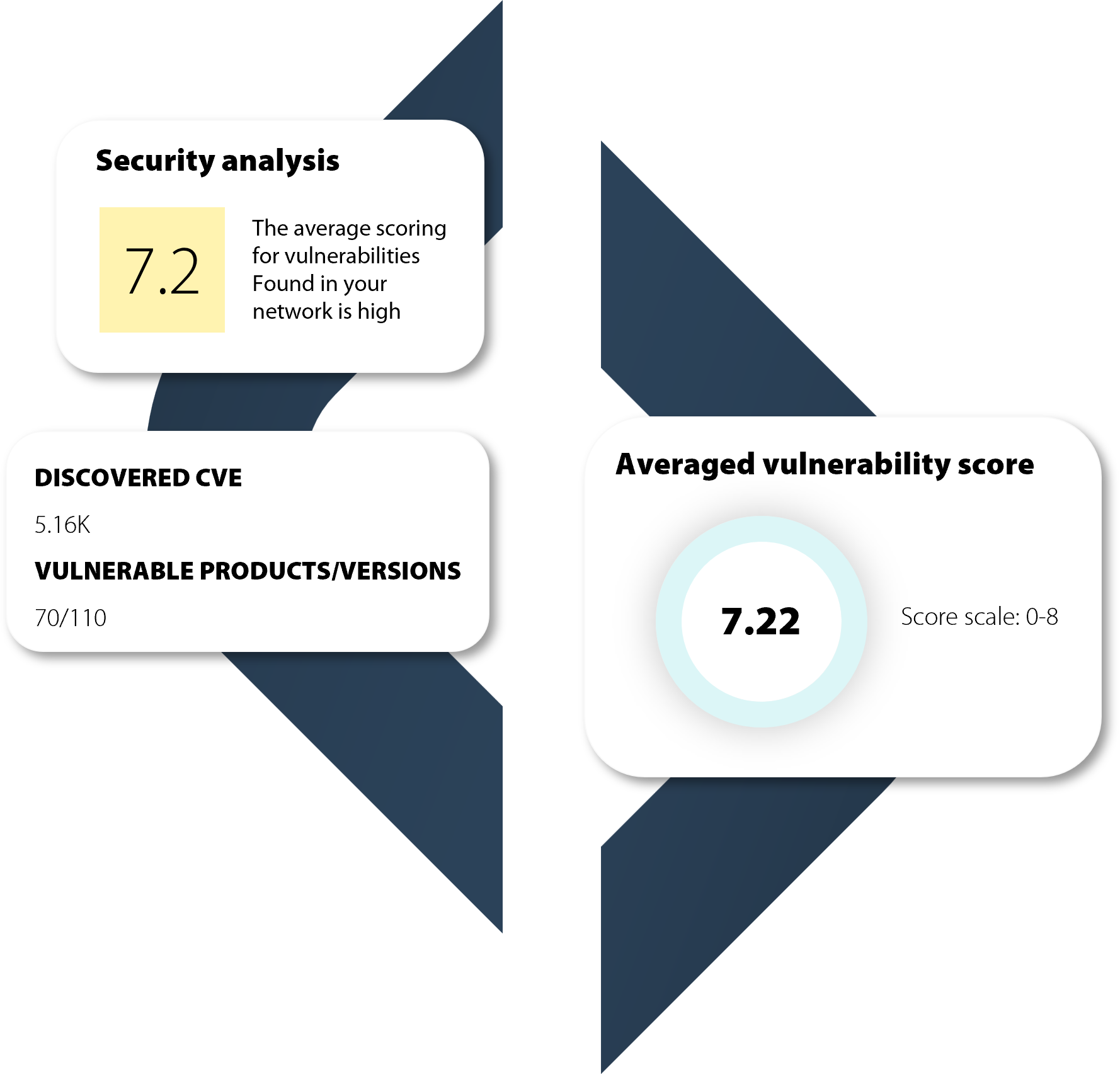
Fewer findings, better reasons, faster remediation
Trust the findings
Match vulnerabilities against accurate inventory data to detect real risks, reduce false positives, and avoid gaps.
Prioritize by real risk
Combine exploitability, business criticality, and CVSS to prioritize vulnerabilities with the greatest impact.
Connect findings to action
Turn vulnerabilities into targeted fixes, from patching to replacement, and track each one to verified resolution.
Report with evidence
Maintain traceable history of findings, decisions, exceptions, and remediation for audits and security reviews.
Vulnerability Management
Raynet One builds Vulnerability Management on the asset intelligence it already maintains, which is what determines whether a finding is accurate in the first place.
Discovery collects software, hardware, operating system, configuration, and cloud data from across the environment through agent-based and agentless inventory and more than 200 connectors. The Raynet One Technology Catalog normalizes it into consistent vendor, product, version, edition, and model identity, then enriches it with lifecycle status, support dates, and classification.
Vulnerability information from public sources including the NIST National Vulnerability Database is matched against that normalized installed base and kept current daily. Because both sides of the match use the same product identity, findings land on the systems that genuinely run the affected software.
Scoring then applies Risk-based Vulnerability Management. CVSS is one input alongside exploitability, the criticality of the affected system, ownership, and whether the software is still supported at all. Dashboards show what changed, what is overdue, and what is heading toward a deadline, and findings route onward into patching, mitigation, or replacement.
From total IT shutdown to complete restoration in less than 2 weeks

International business group gets complete IT asset overview just days after a critical phishing attack and develops an innovative, future-proof IT security strategy.
Thanks to Raynet Technologies, the organization got the tools they needed to completely restore their digital infrastructure in just 13 days.
Customers who rely on Raynet technologies

A CVE list is only as accurate as the inventory behind it
Vulnerability data is public. The NVD publishes it and most tools read the same feeds, so the feed is not the differentiator. What matters is whether CVEs are matched to the software you actually run. That match depends on product identity, where inventories often fall short: applications appear under different names, Linux packages use distribution-specific naming, and hardware and firmware advisories sit in separate CPE namespaces. Raynet One matches against a catalog built for exactly this problem:
- Normalized product identity: Vendor, product, version, edition, and model resolved to one canonical record, so CVEs reach every affected installation.
- Publisher resolved to the real upstream: The actual software developer, not the distributor or reseller, ensuring alignment with vendor advisories.
- Hardware and firmware kept distinct: Hardware and operating system CPE entries are modeled separately to prevent incorrect vulnerability matches.
- Context arrives with the finding: Lifecycle status, support dates, ownership, and classification are included for immediate prioritization.
A scanner reports what it inferred. Raynet One reports what you have, and that difference is what decides whether the list is worth working through.
See how Raynet One matches CVEs to your installed base.
Discover more about Vulnerability Management
Frequently asked questions about Vulnerability Management
What is Vulnerability Management?
Vulnerability Management is the continuous process of identifying vulnerabilities in systems, applications, and networks, assessing their risk in context, prioritizing them, and remediating them before they are exploited. It covers the full loop from detection through to verified closure, not just the detection step.
What is Risk-based Vulnerability Management (RBVM)?
How is Vulnerability Management different from Continuous Threat Exposure Management?
How does Vulnerability Management relate to Security Patch & Update Management?
What makes Vulnerability Management with Raynet One different?
Which data sources does Raynet One use for vulnerability information?
Contact our experts
Interested in our solutions, need further Information, or have questions?
With more than 25 years of experience and numerous customer projects worldwide, we can help you with your challenges – contact us today!