
// End-of-Life & End-of-Support Management
Identify unsupported technology before it becomes business risk
End-of-Life (EOL) & End-of-Support (EOS) Management helps organizations identify hardware and software that is outdated, unsupported, or approaching lifecycle deadlines. The goal is to understand where lifecycle risk exists, which assets are affected, and what action is needed before security, compliance, cost, or operational issues arise.
Keep technology lifecycles under control before unsupported assets become risk
Unsupported technology does not always fail immediately. It can continue running quietly, even after the vendor support, updates, and maintenance needed to keep it secure, stable, and defensible are no longer available.
That is why EOL/EOS risk can grow unnoticed. Hardware and software may reach EOL or EOS faster than teams can replace, migrate, or retire them. Without structured lifecycle management, affected assets are often discovered too late: during an audit, incident, renewal, vulnerability review, or compatibility issue.
Raynet One helps organizations move from reactive lifecycle cleanup to proactive lifecycle control. By combining asset visibility, normalized product data, and lifecycle intelligence, teams can identify EOL/EOS risk earlier and understand which assets need attention before they become security, compliance, or operational issues.

Reduce lifecycle risk with EOL/EOS intelligence you can act on
Close security gaps before they become exploitable risks
Identify assets approaching or already past support deadlines, connect them with vulnerability and exposure context, and prioritize remediation before risks remain open.
Strengthen compliance and governance
Maintain clear evidence of lifecycle status, ownership, controls, remediation plans, and approved exceptions to support audits and risk reviews.
Reduce Technical Debt and lifecycle cost
Plan upgrades, replacements, migrations, and retirements before legacy assets become harder to maintain, more expensive to support, or difficult to remove.
Improve operational stability
Reduce compatibility issues, support effort, and service disruption by managing lifecycle changes before they affect business-critical systems.
End-of-Life & End-of-Support Management with Raynet One
Managing EOL/EOS risk requires more than a list of vendor support dates. Teams need to know which assets exist, which versions and models are deployed, where they are running, who owns them, and how critical they are to the business.
Raynet One brings this information together in one lifecycle view. It consolidates asset data from across the IT environment, normalizes product and version information, and enriches discovered hardware and software with EOL/EOS intelligence from Raynet One Technology Catalog.
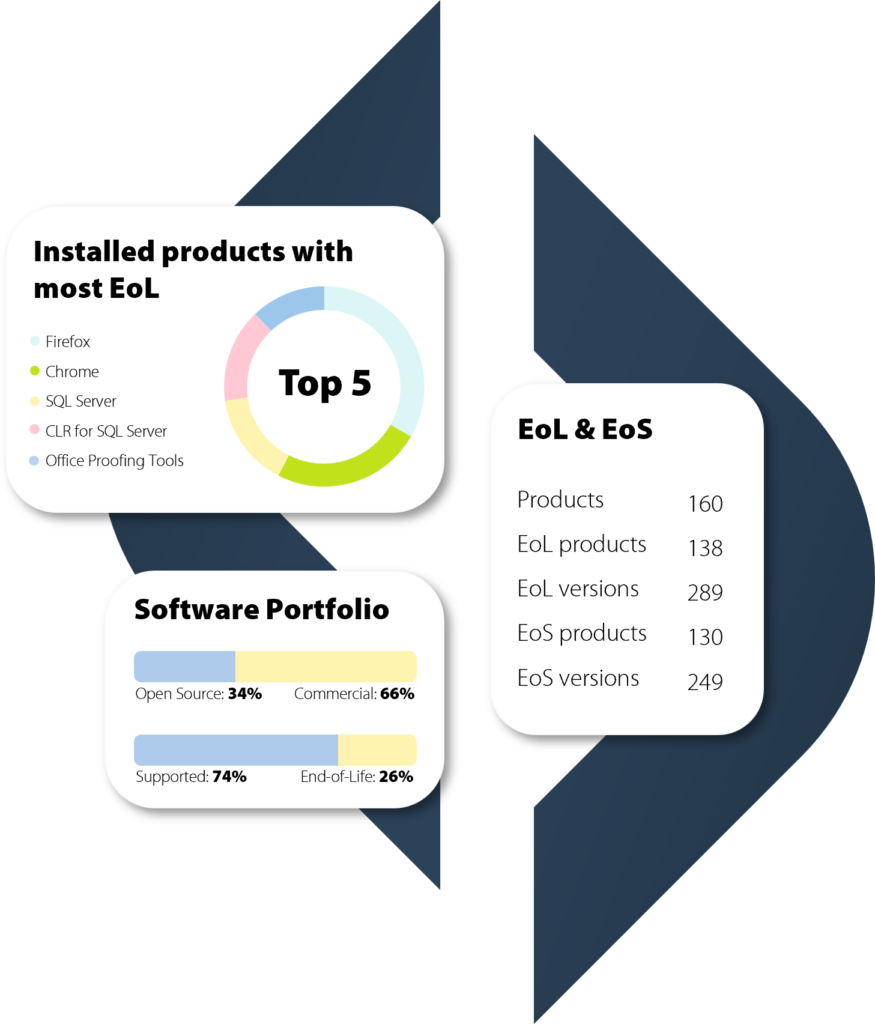
Interactive dashboards help teams see which assets are already unsupported, which lifecycle deadlines are approaching, and where business-critical systems may be affected. This makes it easier to prioritize remediation, plan migrations or replacements, document exceptions, and communicate lifecycle risk across IT, security, compliance, and business teams.
With Raynet One, EOL/EOS Management becomes a continuous process: identify affected assets, understand their context, prioritize action, and reduce lifecycle risk before unsupported technology becomes a security, compliance, or operational issue.
Cyberattack on IT infrastructure – full transparency and recovery in just 13 days

Following a targeted phishing attack, an international retail group lost track of its IT assets – with critical consequences for security and operations.
Thanks to Raynet technology, the company regained complete transparency across all systems in less than two weeks – and was able to restore its entire IT infrastructure in just 13 days.
An example of effective end-of-life & end-of-support management in an emergency.
Customers who rely on Raynet technologies




Go beyond support dates with Raynet One Technology Catalog
Standard discovery tools can show what is installed or connected, but they do not usually provide the full lifecycle intelligence needed to manage EOL/EOS risk at scale. Support status, product retirement dates, vendor lifecycle terminology, and migration-relevant product information come from market and vendor data, not from asset discovery alone.
That is where Raynet One Technology Catalog makes the difference. It enriches discovered assets with standardized product names, vendors, versions, editions, models, lifecycle stages, support status, and related market intelligence. This helps teams avoid manual vendor research, inconsistent product matching, and incomplete lifecycle reporting.
Raynet One also connects lifecycle intelligence with operational context. Instead of only seeing that a product is EOL or EOS, teams can understand where it is deployed, who owns it, how critical it is, and which action should come next.
With Raynet One Technology Catalog, organizations can:
- Replace manual vendor research with continuously enriched lifecycle intelligence
- Match EOL/EOS information more accurately through normalized product, vendor, version, and model data
- Understand support status in relation to ownership, business relevance, exposure, and operational impact
- Prioritize action based on risk, criticality, lifecycle deadlines, and available mitigation options
- Support audit and compliance conversations with clearer lifecycle evidence
- Reduce Technical Debt by identifying unsupported technology before it becomes unmanaged risk
This gives IT, security, compliance, procurement, and business teams more than lifecycle visibility. It gives them the context needed to act earlier, prioritize better, and govern EOL/EOS risk with confidence.
Discover exciting topics related to End-of-Life & End-of-Support Management
Frequently asked questions about End-of-Life & End-of-Support Management
What is EOL & EOS Management?
What is the difference between EOL and EOS?
Why is EOL/EOS Management important for businesses?
How does Raynet One help with EOL/EOS Management?
Why is a Technology Catalog important for EOL/EOS Management?
When should organizations start EOL/EOS Management?
Organizations should start EOL/EOS Management before support ends. EOL announcements create the planning window, while EOS marks the point where continued use requires closer review, mitigation, or approved exception handling.
Contact our experts
Interested in our solutions, need further Information, or have questions?
With more than 25 years of experience and numerous customer projects worldwide, we can help you with your challenges – contact us today!