
IT Portfolio Optimization with Raynet One: Reduce costs and create transparency
IT Portfolio Optimization is the process of finding software that overlaps, goes unused, or no longer earns its cost, then consolidating or retiring it. The goal is a smaller and cheaper portfolio that still does everything the business needs, rather than one cut until something breaks.
Maximize your software investment & plan for the future
Despite centralized software procurement and deployment, many companies are paying too much money to operate and license their software. According to Gartner, total enterprise software spending in 2022 will be $670 billion and rising.
To ensure that IT costs and the associated effort continue to be kept as low as possible, companies must have visibility over the installations and use of on-premises, SaaS, PaaS & IaaS applications. As a result, strategic decisions can be made, costs can be saved, and portfolio optimization can be performed.
Reduce software sprawl while maintaining business functionality
Find the overlap
See which products serve the same business function across teams, vendors, and naming conventions, not just which products exist.
Cut the right one
Usage, license type, and contract terms decide which of two overlapping tools goes, so consolidation does not remove the one people actually use.
Standardize what stays
Converge on fewer products and fewer versions, which shrinks the attack surface and the support effort at the same time.
Keep the saving
Track the portfolio as it changes, so sprawl does not quietly rebuild in the eighteen months after the rationalization project closes.
IT Portfolio Optimization
Companies often face challenges within their IT software portfolio due to the complexity and growth of their technology environments. Over time, as organizations expand and evolve, they accumulate a mix of software solutions that overlap in functionality or become outdated. This leads to increased costs, inefficiencies, and management difficulties.
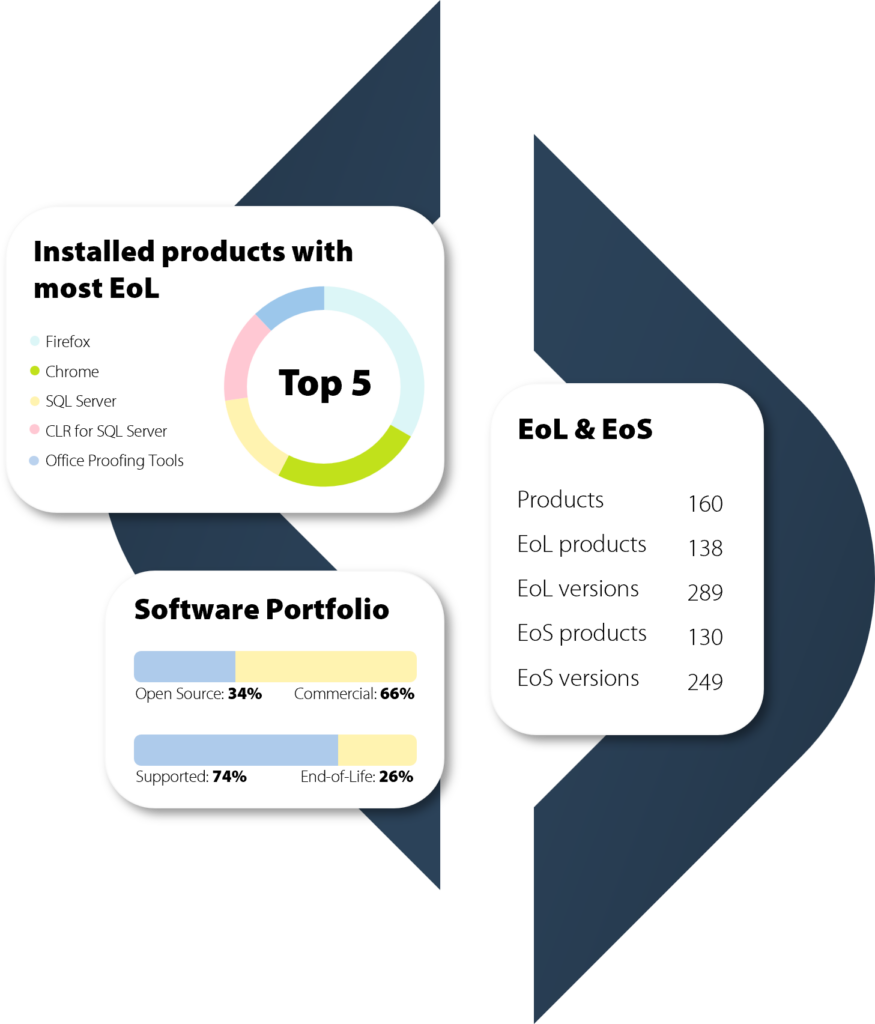
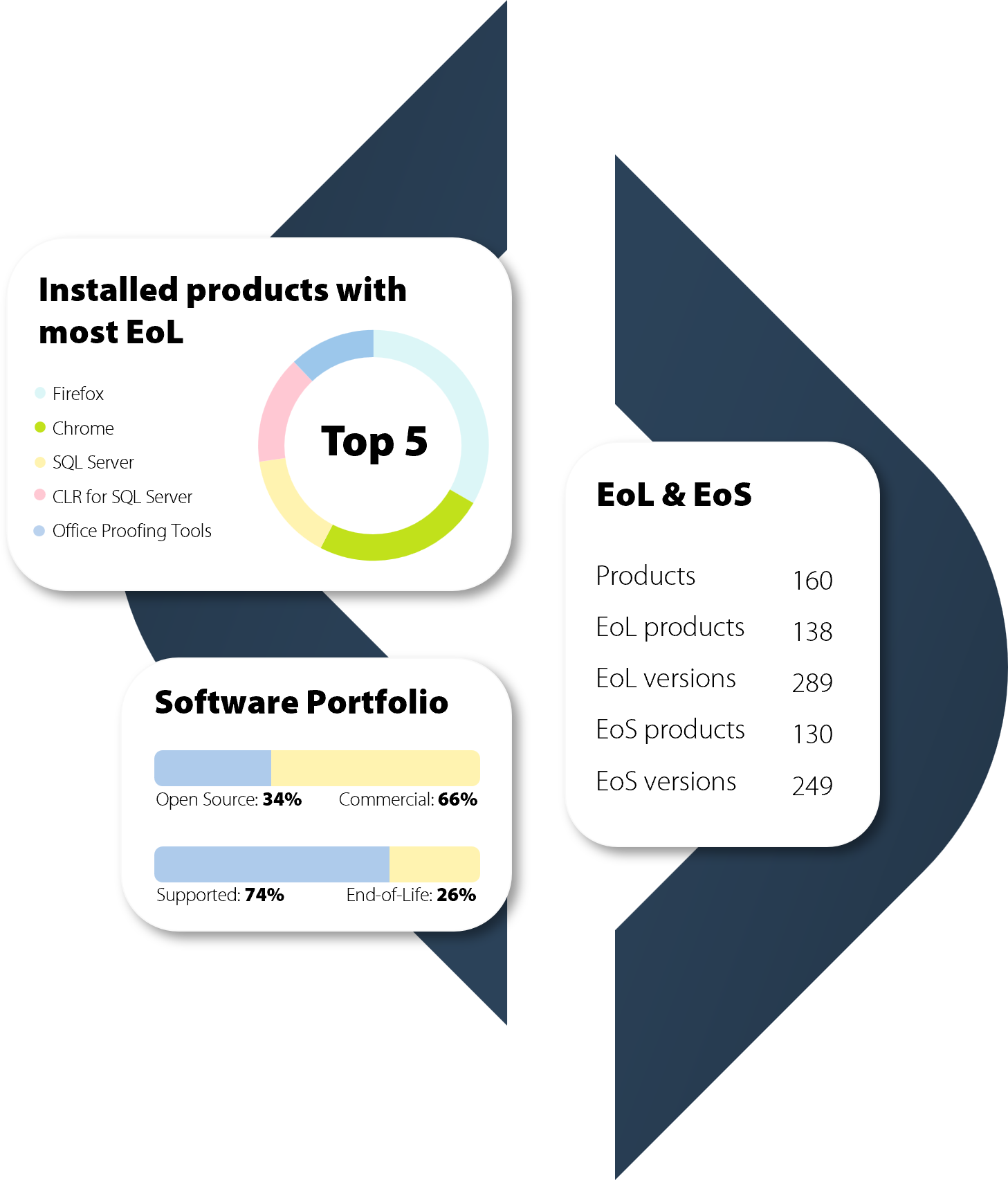
Raynet One supports you in identifying costly and redundant applications within your IT landscape. Through intelligent data enrichment with our Technology Catalog, you benefit from deep insights into usage, software and version sprawl as well as information on outdated and redundant software applications.
By actively managing your IT portfolio, you can optimize costs, streamline operations, and ensure that your technology supports their strategic goals.

15x ROI: True IT Asset Visibility as a success factor at Türk Telekom

When a project continues to deliver value years after its completion, you know it was worth it. Türk Telekom can proudly regard its award-winning Software Asset Management project from 2020 as a complete success.
Just three years later, the investment had already paid off, with Türk Telekom demonstrably saving 15 times the original project costs. Even today, six years after the project began, True IT Asset Visibility remains the foundation for the entire group and a clear success factor for all IT initiatives.
Customers who rely on Raynet technologies



You cannot consolidate what you cannot compare
Rationalization stalls at the comparison step. An inventory lists Zoom, Teams, Webex, and GoToMeeting as four unrelated product names. Nothing in it says those four do the same job. So somebody exports to a spreadsheet, groups by hand, guesses at the categories, and the analysis is already stale the month after it is finished. Raynet One classifies function in the catalog itself:
- Products grouped by what they do: every product carries standardized function and category classification, so overlapping capability surfaces as a finding rather than as somebody’s spreadsheet hypothesis.
- Comparable across vendors and names: normalized vendor, product, and edition identity means a rename, an acquisition, or a regional SKU does not break the grouping.
- Overlap weighed against usage: function overlap is read alongside real usage and license type, so the consolidation candidate is the tool nobody opens, not the one that happens to be easiest to cancel.
- Recomputed, not redone: classification lives on the record, so the overlap picture updates as the estate changes instead of expiring with last year’s analysis.
Consolidation decisions are only as good as the grouping behind them, and that is the part most portfolios never get right.
Further use cases, you might also be interested in
Frequently asked questions about IT Portfolio Optimization
What is IT Portfolio Optimization?
Why is IT Portfolio Optimization important for companies?
What advantages does Raynet One offer for IT Portfolio Optimization?
How can you tell that two applications actually do the same thing?
Through function-level classification rather than name matching. Two products with different names, vendors, and price points can serve an identical business function, and a standard inventory has no way to represent that. Raynet One assigns standardized function and category classification to each product, so tools serving the same purpose group together even when nothing about their names suggests a relationship.
How is IT Portfolio Optimization different from Software Asset Management?
How quickly can IT Portfolio Optimization be implemented with Raynet One?
Contact our experts
Interested in our solutions, need further Information, or have questions?
With more than 25 years of experience and numerous customer projects worldwide, we can help you with your challenges – contact us today!